Master
The Sweet
Science
A comprehensive guide to boxing — from your first stance to advanced ring strategy. Everything you need to become a complete fighter.
Four Pillars of Boxing
The Six Core Punches
Every combination in boxing is built from six fundamental punches. Mastering these — their mechanics, timing, and application — is the foundation of offensive boxing.
Jab
The most important punch in boxing. A quick, straight punch with your lead hand used to set up combinations, control distance, and gauge your opponent.
Cross
A powerful straight punch with your rear hand. The cross travels across your body, generating power from hip rotation and body weight transfer.
Lead Hook
A semi-circular punch with your lead hand targeting the jaw or body. Requires proper shoulder rotation and elbow positioning at 90 degrees.
Rear Hook
The rear hook is less common but devastating when landed. It requires more setup and commitment than the lead hook.
Lead Uppercut
An upward punch with your lead hand, targeting the chin or solar plexus. Most effective at close range when the opponent's guard is high.
Rear Uppercut
The most powerful uppercut, driven by full hip and shoulder rotation. A knockout punch when landed cleanly on the chin.
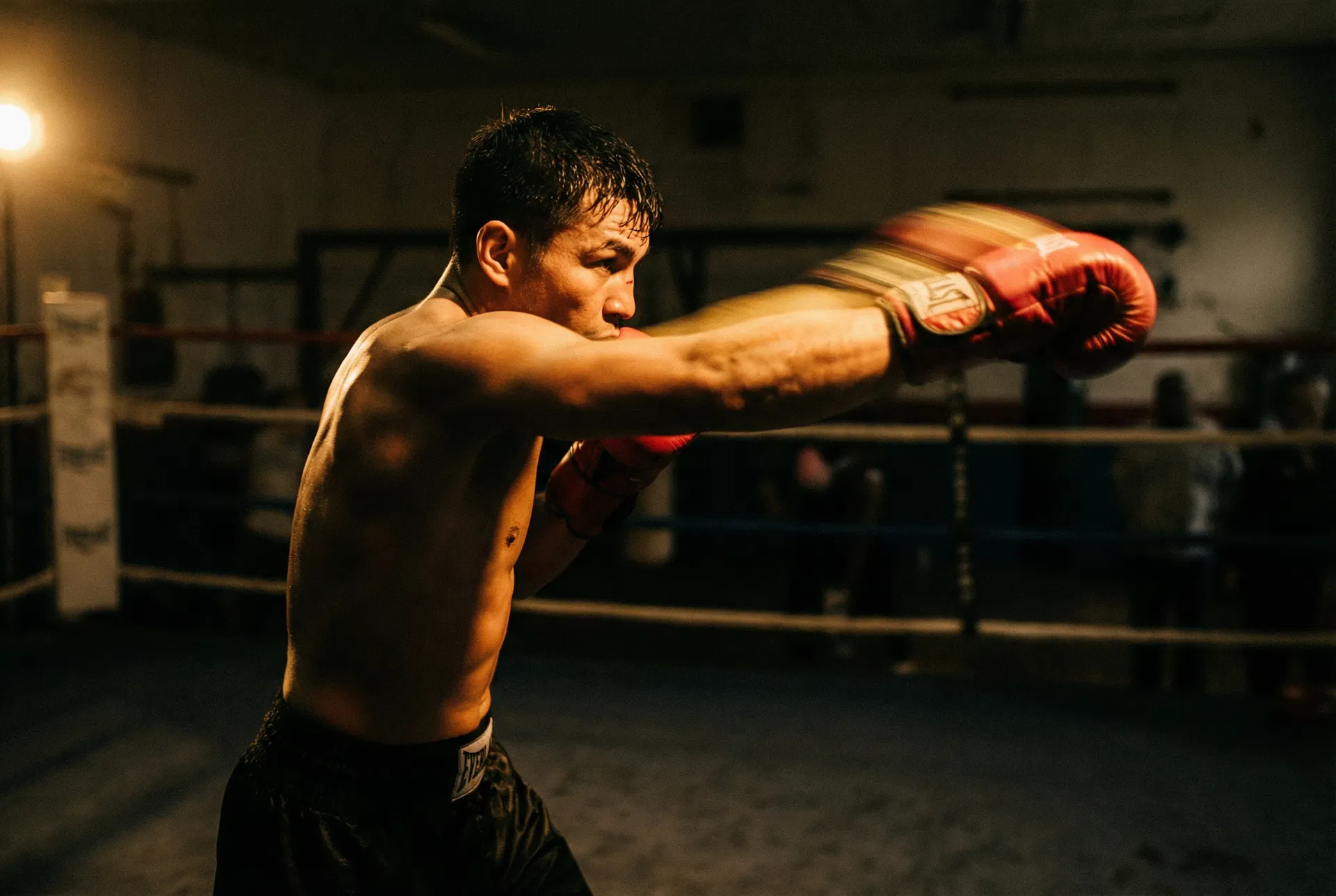
"The jab is the most important punch in boxing. It sets up everything."
— Boxing FundamentalsBoxing Stances
Orthodox
Most CommonThe standard stance for right-handed fighters. Left foot forward, right foot back. Lead hand (left jab) extended, rear hand (right cross) protecting the chin.
- Left foot forward
- Right hand is power hand
- Used by ~85% of fighters
- Jab with left, cross with right
Southpaw
Left-HandedThe mirror image of orthodox, used by left-handed fighters. Right foot forward, left foot back. Creates awkward angles for orthodox opponents.
- Right foot forward
- Left hand is power hand
- Natural for left-handers
- Creates angle advantages
Switch
AdvancedThe ability to fight effectively from both stances. Switching mid-fight confuses opponents and opens up new angles and combinations.
- Requires mastery of both stances
- Creates unpredictability
- Advanced technique
- Used by elite fighters
Training Like a Boxer
Boxing conditioning is among the most demanding in all of sport. Roadwork, shadowboxing, bag work, sparring, and strength training — each serves a specific purpose in building a complete fighter.
View Training Programs
Ring Generalship
The ability to control the pace, distance, and location of a fight. Ring generalship separates good fighters from great ones. It's chess at 180 beats per minute.
Ready to Step Into the Ring?
Every champion started as a beginner. Start with the fundamentals, be consistent, and trust the process.